Top 5 Prebiotic Plants You Can Grow at Home for a Healthier Gut
Looking for a natural way to boost digestion and overall wellness? Growing your own prebiotic plants at home is a simple and rewarding step toward better gut health. Prebiotics are special types of dietary fiber that feed the friendly bacteria in your gut, helping maintain a balanced microbiome and stronger immunity.
Unlike probiotics (which add beneficial bacteria), prebiotics nourish the bacteria already living in your gut. The good news? Many prebiotic-rich plants are easy to grow right in your backyard, balcony, or even in containers indoors.
Here are the top 5 prebiotic plants to grow at home—all beginner-friendly, and perfect for your own healthy kitchen garden.
1. Garlic:
Prebiotic Component: Fructooligosaccharides (FOS)
Why It’s Great: Garlic is one of the richest natural prebiotics. It’s FOS fibers fuel healthy gut bacteria and support digestion while adding irresistible flavor to meals.
How to Grow:
- Plant garlic cloves directly in well-drained soil with full sunlight.
- Water moderately and harvest when leaves start turning yellow (6–8 months).
Usage Idea: Roast or sauté home-grown garlic for soups, sauces, and teas.
2. Onions:
Prebiotic Component: Inulin & FOS
Why It’s Great: Onions help maintain a diverse gut microbiome and support smooth digestion. They’re versatile, adding sweetness or spice to countless recipes.
How to Grow:
- Sow onion seeds or bulbs in rows or pots with full sun exposure.
- Keep the soil moist but not waterlogged.
Usage Idea: Enjoy raw in salads or lightly cooked to preserve prebiotic fibers.
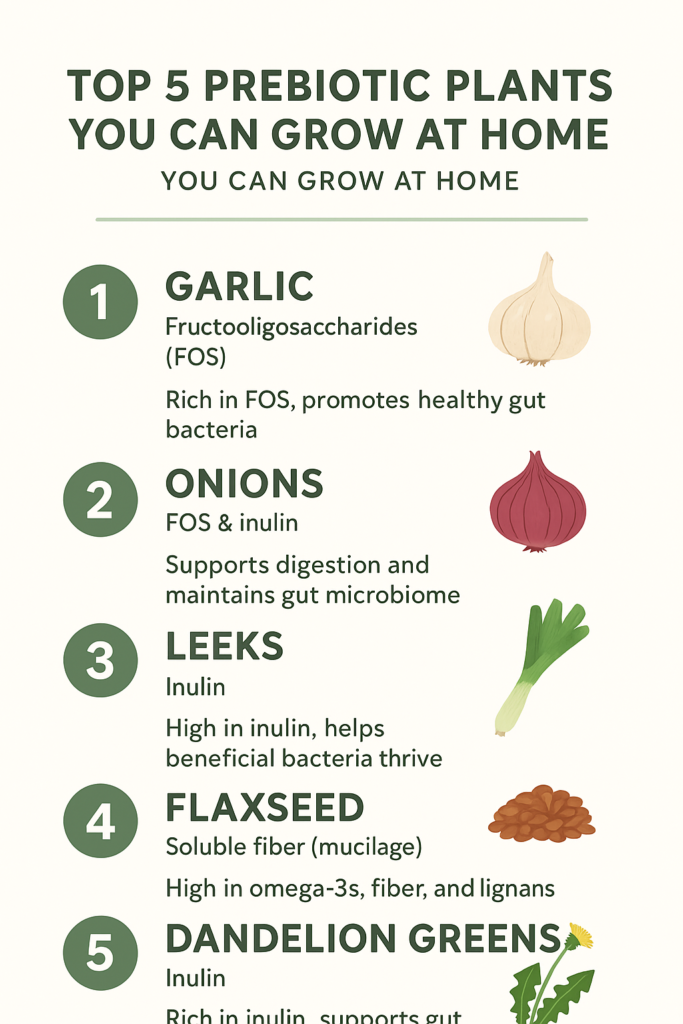
3. Leeks:
Prebiotic Component: Inulin
Why It’s Great: Leeks provide a milder flavor than onions but are equally powerful for gut health. They’re loaded with inulin, which helps beneficial gut bacteria thrive.
How to Grow:
- Grow in cooler seasons with fertile, loose soil.
- Water regularly; harvest when stems are thick and firm.
Usage Idea: Use leeks in soups, stews, or roasted vegetable dishes.
4. Flaxseed (Linseed):
Prebiotic Component: Soluble fiber (mucilage)
Why It’s Great: Flaxseed is a powerhouse of omega-3 fatty acids, fiber, and lignans—and its soluble fiber acts as a mild prebiotic, feeding good bacteria and promoting smoother digestion.
How to Grow:
- Choose unprocessed flax seeds (Linum usitatissimum).
- Plant directly in containers or beds with well-drained soil and 6–8 hours of sunlight.
- Water evenly; harvest when seed pods turn golden brown.
Usage Idea: Grind seeds fresh for smoothies, oatmeal, or sprinkle over salads.
5. Dandelion Greens:
Prebiotic Component: Inulin
Why It’s Great: Often mistaken for a weed, dandelion greens are incredibly rich in inulin and essential minerals. They’re also one of the easiest prebiotic plants to grow.
How to Grow:
- Plant in pots or beds with partial sunlight.
- Harvest young leaves for best taste.
Usage Idea: Add fresh leaves to salads or sauté lightly with garlic and olive oil.
Frequently Asked Questions (FAQs):
Q1. What are prebiotics and why are they important?
Prebiotics are non-digestible fibers that act as food for beneficial gut bacteria. They improve digestion, enhance nutrient absorption, and support immune health.
Q2. Can I grow these prebiotic plants indoors?
Yes! Garlic, onions, flaxseed, and dandelion greens can grow well in pots with good sunlight and proper drainage. Leeks prefer outdoor beds.
Q3. How long does it take to harvest flaxseed?
Flaxseed typically matures in 90–120 days. Once pods turn golden brown and dry, they’re ready for harvest.
Q4. Are all these plants halal?
Yes — all plants listed are 100 % plant-based and halal-friendly.
Q5. Which prebiotic plant is easiest for beginners?
Dandelion greens and garlic are the easiest and most forgiving for first-time gardeners.
Conclusion:
Growing your own prebiotic plants to grow at home is an easy way to combine wellness with sustainability. Garlic, onions, leeks, flaxseed, and dandelion greens not only enhance your meals but also help balance your gut microbiome naturally.
Whether you’re working with a small balcony or a full backyard, these five plants thrive in minimal space and reward you with fresh, organic, gut-friendly goodness.
Pro Tip: Pair your homegrown prebiotics with probiotic-rich foods like yogurt, kimchi for a complete “synbiotic” boost that keeps your gut ecosystem happy and healthy.