How Gut Health Affects Hormones in Women
Most women know what hormonal imbalance feels like — mood swings, bloating, cravings, acne, fatigue, PMS, irregular periods.
But what most women don’t know is that your hormones are controlled by your gut more than anything else.
Yes…Your gut (microbiome) is the command center that helps regulate estrogen, progesterone, thyroid hormones, cortisol, and even insulin.
If your gut is unhealthy, your hormones become chaotic — no matter how “healthy” you eat.
In this guide, we’ll break down exactly how gut health affects hormones in women, what science says, and how you can balance both naturally.
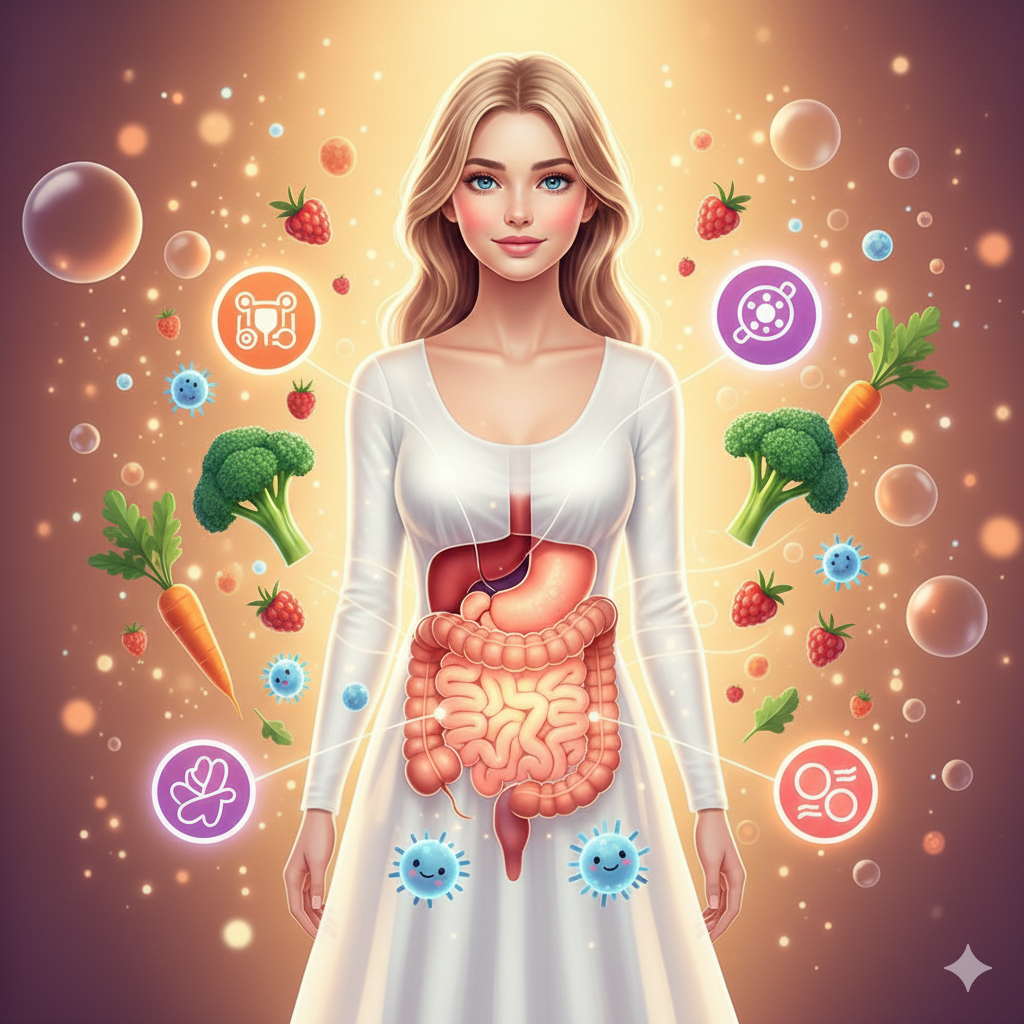
1. The Gut-Hormone Link
Your gut is home to over 38 trillion bacteria, and many of them directly influence your hormones.
The gut communicates with your:
- Endocrine system (hormone glands)
- Brain (gut-brain axis)
- Nervous system
- Immune system
This means your gut regulates:
✔ Mood
✔ Appetite
✔ Metabolism
✔ Digestion
✔ Stress
✔ PMS
✔ Reproductive health
When your gut bacteria are imbalanced (a condition called dysbiosis), everything from acne to thyroid issues can appear.
2. How Gut Bacteria Regulate Estrogen (Estrogen Detox Explained):
Here’s the part most women don’t know:
Your gut has a special group of bacteria called the estrobolome.
These bacteria help:
- Break down estrogen
- Detox extra estrogen from your body
- Keep estrogen levels stable
When your gut is unhealthy:
Estrogen can’t be removed
Excess estrogen recirculates in the body
Hormonal imbalance begins
This leads to:
- PMS
- Heavy periods
- Bloating
- Weight gain around stomach/hips
- Mood swings
- Breast tenderness
- Fibroids (in severe cases)
This is called estrogen dominance, and it’s extremely common in women.
A healthy gut fixes this because it supports estrogen detoxification.
3. PMS and Gut Bacteria: Why Your Cycle Gets Worse with Poor Gut Health:
Your gut influences PMS more than your ovaries do.
Here’s why:
During your menstrual cycle:
- Inflammation increases
- Mood-regulating chemicals drop
- Stress hormones rise
A healthy gut keeps this balanced.
But if your gut is inflamed or imbalanced:
- PMS symptoms intensify.
- Mood swings get worse.
- Bloating becomes painful.
- Cravings increase.
- Cramps become more severe.
Women often blame their hormones, but it’s actually their gut making PMS worse.
4. Gut Health & Mood: Why Hormone-Related Anxiety Gets Worse:
Women experience anxiety and mood swings during hormonal changes, and poor gut health magnifies this.
So, if you question is How gut health affects hormones in women? the answer is:
Because your gut produces:
- 95% of your serotonin (happy hormone)
- 50% of dopamine (motivation hormone)
If your gut bacteria are unhealthy:
- Mood regulation becomes weak.
- Stress increases.
- Cortisol spikes.
- PMS anxiety worsens.
- Mood swings intensify.
This is why fixing your gut often reduces:
- Mood swings
- PMS irritability
- Period anxiety
- Emotional eating
- Stress-related fatigue
5. Gut Health & Thyroid Function in Women:
Your thyroid controls:
- Metabolism
- Weight
- Energy levels
- Body temperature
- Skin & hair health
The thyroid and gut are deeply connected.
A damaged gut causes:
Poor absorption of iodine, zinc, selenium → all needed for thyroid
Increased inflammation → slows thyroid
Leaky gut → triggers autoimmune thyroid issues
This is why hypothyroidism symptoms often improve with gut repair.
6. Insulin & Weight: Why Gut Health Affects Belly Fat:
Poor gut health causes blood sugar spikes, which lead to:
- Stubborn belly fat.
- PCOS worsening.
- Hormonal acne.
- Fatigue.
- Sugar cravings.
A balanced gut improves insulin sensitivity, which makes weight loss easier — especially for women with hormonal issues.
7. How to Improve Gut Health to Balance Hormones Naturally
You don’t need supplements or expensive diets — just simple habits.
✔ Eat 1–2 probiotic foods daily
Examples:
- Yogurt (unsweetened)
- Lassi
- Fermented vegetables (halal, brine-fermented)
✔ Add prebiotic foods (feed good bacteria)
- Onions
- Garlic
- Oats
- Bananas
- Flaxseed
- Lentils
- Apples
✔ Reduce sugar for 2 weeks
Sugar feeds harmful bacteria → more hormonal imbalance.
✔ Eat 25–30g fiber daily
Fiber carries estrogen out of the body.
✔ Sleep 7–8 hours
Your hormones reset during sleep.
✔ Reduce chronic stress
Stress destroys your gut bacteria and spikes cortisol.
✔ Limit endocrine disruptors
- Plastic bottles.
- Parabens.
- Scented lotions.
- Non-stick cookware.
If you want to read more about best prebiotic and probiotic foods here is the post specially designed for busy readers so you can get the list without so much scrolling and reading. Best prebiotic and probiotic foods list.
8. Signs Your Gut Is Causing Hormonal Imbalance:
You may have a gut-related hormonal issue if you have:
- PMS worsening every month.
- Painful bloating.
- Fatigue.
- Cystic acne.
- Mood swings.
- Irregular periods.
- Anxiety.
- Weight gain.
- Hair thinning.
- Low libido.
- Poor digestion.
If multiple symptoms match → treat your gut first.
9. What Science Says About the Gut-Hormone Link
Recent studies show:
- A healthy gut regulates estrogen and reduces PMS.
- Gut bacteria influence mood hormones like serotonin.
- Poor gut health worsens PCOS and inflammation.
- The estrobolome directly controls hormone detox.
- Dysbiosis increases risks of infertility & period conditions.
In short:
Your hormones cannot balance until your gut is balanced.
FAQs:
1. How does gut health influence female hormones?
Gut bacteria regulate estrogen, progesterone, thyroid hormones, insulin, and cortisol. An imbalanced gut disrupts hormone detox and increases inflammation.
2. Can poor gut health cause PMS?
Yes. Gut imbalance increases inflammation and disrupts serotonin, worsening PMS mood, bloating, pain, and cravings.
3. Does fixing gut health help hormonal acne?
Absolutely. Gut-friendly diets reduce inflammation, balance insulin, and lower excess estrogen — all major causes of acne.
4. How long does it take to fix gut-related hormonal imbalance?
Most women notice improvement in 2–4 weeks with probiotics, prebiotic foods, and reduced sugar.
5. What foods balance hormones naturally?
Yogurt, oats, flaxseed, leafy greens, lentils, apples, bananas, chia seeds, and fermented foods.
Conclusion:
Your gut is not just a digestive organ — it’s a hormonal control center.
If your gut is inflamed, your hormones suffer.
But the good news?
Women who improve their gut often see major changes within 2–4 weeks, including:
- Better mood
- Fewer PMS symptoms
- Better digestion
- Clearer skin
- More energy
- Balanced cycles
- Reduced bloating
Balancing your gut is the most powerful way to balance your hormones — naturally.